Kara Reynolds
How to Flirt with A Naked WerewolfKara Reynolds is Mo Duvall-Wenstein’s best friend, emotional anchor, and durable link to the life she leaves behind in Mississippi. Their friendship matters because it gives Mo a relationship that is neither controlling nor conditional: Kara helps her navigate ordinary social customs, welcomes her strangeness, and continues to reach across hundreds of miles after Mo moves to Grundy. When Kara later travels to Alaska for Mo’s wedding, the friendship becomes part of the new community Mo has built rather than a relic of the old one.
Identity and Introduction
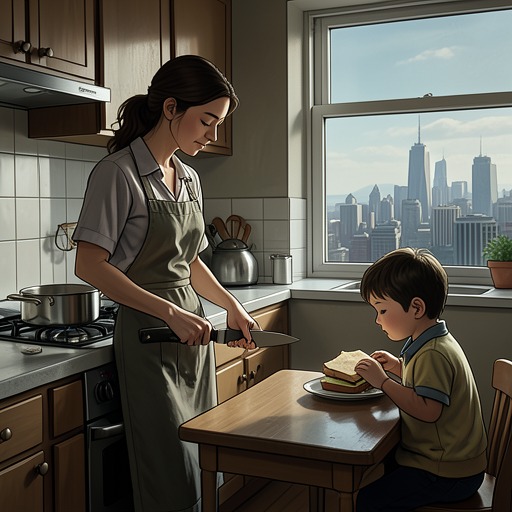
Kara is introduced as the person who taught Mo how to function among “regular people” after Mo entered public high school. Mo had been raised in an unusually protected and ideologically intense household, and enrolling at Leland High School made her sharply aware of how unprepared she was for the outside world. Her rebellion against her mother’s rules—wearing leather shoes, eating school food, and even voting conservative in a mock election—was partly an attempt to feel ordinary. Kara became the practical guide to that project, schooling Mo in the customs and rituals that other teenagers seemed to understand instinctively.
The two girls were markedly different in appearance and temperament. Kara was a “tiny blond dynamo,” while Mo was a “freakishly tall observer.” Kara’s mother compared them to the Tortoise and the Hare: they moved at different speeds but generally reached the same destination. The contrast never became a source of rivalry. Although they shared most of their classes, worked together, and spent nearly all their free time together, they passed over the ordinary jealousies and cattiness that can fracture adolescent friendships.
Friendship and Mutual Belonging
Kara’s home offered Mo a form of belonging distinct from both Mo’s family and the public world she was trying to enter. Mo effectively took up residence there, accepting the time and attention of Kara’s parents, John Reynolds and Reba Reynolds. They welcomed “that hippie girl” despite warnings from gossiping neighbors, and Mo remembered their generosity with lasting gratitude. Their household demonstrated that sharing and giving could be practiced without the ideological pressure that accompanied those values in Mo’s own family.
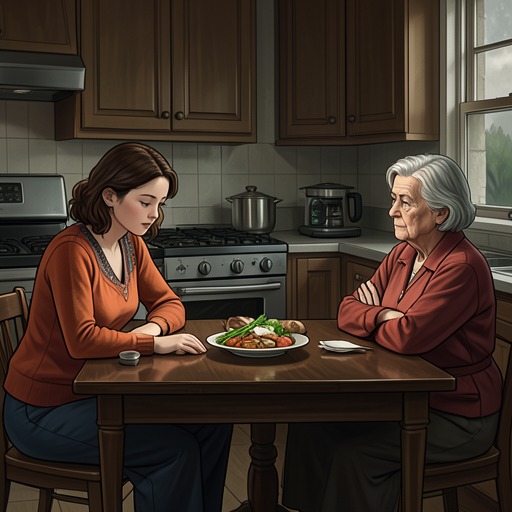
Kara also understood Mo’s complicated relationship with her parents. She maintained that her own parents were intrusive and overbearing, though their interference was less conspicuous than Mo’s mother’s. This comparison allowed Kara to sympathize without treating Mo as helpless. Her friendship therefore combines candor with acceptance: she can joke about family difficulties, expose the absurdity of social situations, and still make room for Mo’s discomfort and difference.
Separation and Continued Contact
Mo’s move to Grundy changes the geography of the friendship but not its importance. When Mo secretly packs up her house while her parents are away at a civil-rights conference, she regrets leaving Kara more than anyone else. Kara is the only person, apart from the postal clerk, trusted with Mo’s new address. Baffled but unsurprised by the drastic decision, Kara makes Mo promise to e-mail every day, immediately turning emotional loyalty into a practical communication routine. Mo, in turn, worries about obtaining Internet access in Grundy so she can keep that promise.
Kara’s first messages after the move preserve their old conversational rhythm. She says she already misses Mo, jokes that Mo has moved her “sorry behind” across the hemisphere, reports a terrible date with a sweating gym acquaintance, admits that she joined a book club for free wine and available men rather than literature, and announces that she quit the club for a new gym. The details are deliberately ordinary, but their function is serious: Kara keeps Mo connected to the familiar stream of gossip, self-mockery, and daily news while Mo is trying to establish a life in an unfamiliar town.
When Kara asks whether Grundy is beautiful, remote, or populated by people resembling the cast of Northern Exposure, Mo answers through affectionate correction and humor. Kara’s curiosity makes the new place imaginable without pretending that distance is insignificant. The exchange shows that their intimacy does not depend on physical proximity; it survives through a shared comic language that lets both women acknowledge separation without dramatizing it into abandonment.
Role in Mo’s New Life
Kara’s friendship remains present even as Mo begins to belong in Grundy. At the Blue Glacier Saloon, Mo discovers that she likes the kitchen, the friendly voices, and the possibility of taking a “baby step into the community.” Kara is not physically there for that transition, but she is the person Mo measures the experience against: the friend who knows where Mo came from and can recognize what it means for her to choose a place for herself rather than merely rebel against her parents.
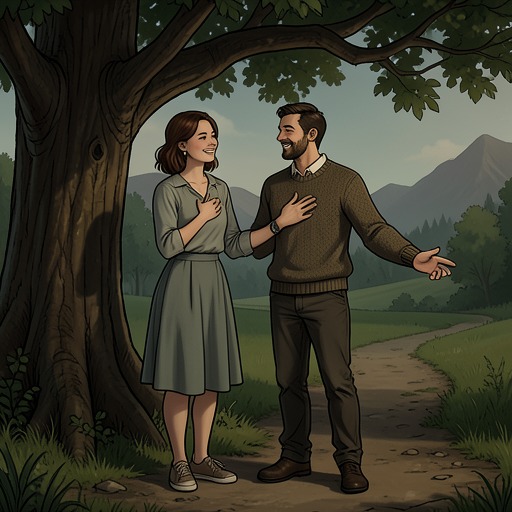
Kara later makes a planned, once-in-a-lifetime journey from Mississippi to attend Mo’s wedding and serves as maid of honor. Her arrival confirms that Mo’s new life has not required her to sever her oldest attachment. During the ceremony, Kara and Alan Dahling begin exchanging unmistakable romantic attention and continue doing so afterward, eventually staying in Grundy through the coming Big Freeze party. Kara thus enters the social network Mo has built around the Blue Glacier, the Graham family, and the town, transforming her from a visitor from the past into a participant in Mo’s future.
Change and Narrative Significance
Kara does not undergo the supernatural transformation that defines many of the book’s major relationships, nor does the narrative give her a dramatic crisis of identity. Her importance lies instead in continuity. She is the friend who knew Mo before Grundy, before the Blue Glacier, and before Mo’s relationship with Cooper Graham forced her to confront the existence of werewolves. Because Kara remains affectionate, funny, and dependable across those changes, she provides a stable measure of how radically Mo’s life has altered.
Her bond with Mo also offers a human counterpoint to the possessive and hierarchical structures surrounding the werewolf pack. Kara’s connection is maintained through promises, messages, visits, and mutual recognition rather than bloodline, alpha authority, or mate-bond rules. The friendship’s movement from teenage companionship in Mississippi to shared celebration in Alaska gives Mo a version of permanence that is chosen and flexible. Kara’s eventual closeness with Alan extends that continuity outward: the old friend does not merely witness Mo’s transformation into a wife and future mother; she finds a place within the community Mo has chosen, making friendship one of the forces that turns escape into home.